


Bag in Box
Why Choose Us?
High Standard Products
Kody Pack specializes in the development and production of liquid and multi-functional packaging bags, such as bags in box, color-printed spout pouches, spout doypacks, stand-up pouches with valve, colostrum bags, cosmetic packaging bags, and so on.
Wide Range of Applications
Our products are widely applied in food, beverage, toiletries, detergents, cosmetics and agriculture.
Rich Experience
Kody Pack is a professional manufacturer of liquid packaging bags, with a factory area of 8000 m2 in Dongguan, China, with more than 10 Years.
What is Bag in Box?
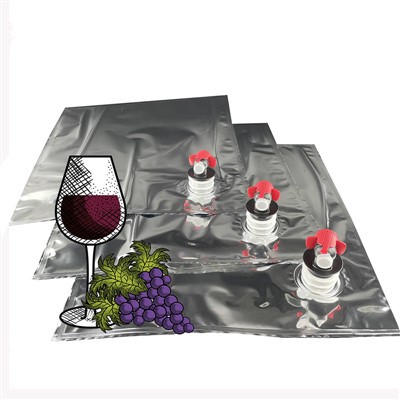
The bag in box is made using composite materials, usually transparent, coloured or metallized polyethylene for the bag and cardboard for the outer packaging, which are fully recyclable and certified as compliant with the legal standards required for the food industry.




1. Sustainable Manufacturing
The manufacturing of bag-in-box packaging is significantly more sustainable than plastic pails because it uses fewer resources. Most pails are made entirely from a high-density polyethylene, which is a more rigid plastic that—according to the Environmental Protection Agency—is only recycled about 30% of the time. The production process of plastic uses petrochemicals as a raw material and generates greenhouse gas emissions as it's produced. Bag-in-box uses less plastic because only the bag part is made out of plastic, and it is a lower density type, reducing the overall amount of plastic used as well as emissions and waste.
Cardboard is a material with one of the lowest environmental impacts because it is 100% biodegradable and recyclable. More specifically, corrugated cardboard degrades within a year maximum. More than 75% of a bag-in-box package is corrugated and fully recyclable, renewable, and biodegradable. The other 25% is the plastic, the recyclability of which depends on the geographical location and its collecting, sorting, and recycling infrastructure.
Thanks to sustainable manufacturing, less resources, and more recyclable materials, switching to bag-in-box cuts greenhouse gases by 52% and energy in production by to up 81%.
2. Efficient Transportation
Bag-in-box products are more convenient to ship and transport. Their rectangular-shaped package takes up less space and are able to easily be stacked together. A skid comprises 50 bag-in-box units but only 36 plastic pail units. This means more bag-in-box products can be shipped at once. As a result, CO2 emissions are lowered because fewer trucks are needed to transport bag-in-box products.
Similarly, for inbound freight, there can be 3,000 empty bags-in-boxes per skid and only 132 empty pails per skid. Empty bag-in-box packaging can be delivered flat and take up very little space. Using the same logic as above, this means there are fewer CO2 emissions due to needing fewer trucks to transport empty bag-in-box packages.
Another important note is the ability of bag-in-box packaging to protect the product as it is shipped, so it arrives undamaged and sealed. Compared to pails, the risk of damaged goods is lower for bag-in-box products. With pails, the rigid plastic can crack and bust, especially when the product is stacked too high and/or when a truck hits a bump on the road. This can also happen when pails lean forward if the driver needs to brake hard or if the bales are facing inward. Bag-in-box is more flexible due to the cardboard and plastic bag, which makes it harder for the packaging to break and product to leak during transportation. Further protection is provided by shrink wrap.
3. Storage Benefits
Once the product arrives at a warehouse or facility, it needs to be stored in the appropriate location to await shipment or for later use. This can be a challenge due to small and tight spaces. Bag-in-box's simple shape and size help minimize space requirements. When stacked, there is no dead space between the boxes. On the other hand, pails are usually circular. When stacked, there is a dead space because they do not fit evenly next to each other, as shown below.
In total, there is a 39% reduction in cubic feet for bag-in-box compared to pails. Bag-in-box skids, for example, are 33 cubic feet for 200 gallons. Pail skids are 59 cubic feet for 180 gallons. That's 20 more gallons of product in 26 less cubic feet for bag-in-box.
4. Ease of Use
Beyond just efficient transportation and storage, the rectangular shape of bag-in-box makes it easier for employees to carry or haul the products to wherever they are needed. Once there, to help with dispensing, there are conveniently placed spigots that release product when opened and block product when closed. This means product can be dispensed without the bag-in-box ever leaving the storage shelf or other flat surface. This is more convenient for customers because, unlike a pail, it does not require additional labor and strength to lift and pour product out.
Other common issues with plastic pails include heavy surging or glugging when product is poured out, as well as extra time and effort to scrape the sides to use all available product. With the bag-in-box spigot, customers can dispense a specific amount of product, eliminating overflow and extra mess. The spigot feature also allows a 99% evacuation rate, meaning nearly all the product inside the bag can be used without hassle, so customers receive the full value of what was purchased more easily.
Components of a Bag in Box System
The bag-in-box system consists of three main components
The Bag
The bag is the heart of the bag-in-box system. It is made of a flexible and durable material that is resistant to punctures, tears, and leaks. The bag is designed to hold the liquid securely and prevent it from coming into contact with air, light, or other contaminants that could affect its quality and freshness.
The Box
The box provides structural support to the bag and protects it from external factors such as impact and temperature changes. The box is typically made of cardboard, which is lightweight, recyclable, and cost-effective.
The Dispensing Tap
The dispensing tap is attached to the bag and allows for easy and controlled pouring of the liquid. It is designed to prevent spills, leaks, and contamination, ensuring that the liquid remains fresh and of high quality
How to use:
· Place the bag inside the box before filling to avoid damaging the full bag.
· Remove the VITOP tap and insert your filler pipe / funnel.
· Carefully slot the opening into your filling aid - this should now support the bag (to avoid spillage).
· Fill your bag.
· Replace your VITOP tap - If you have a closing tool push the tap in firmly once then use the tool to push all the way home.
· For Hot Fill Customers - It is advised not to close the top of the box until the liquid inside the bag has cooled down.

How Does Bag in Box Work?
Bag in box packaging is a type of packaging method that uses a flexible package inside a paperboard carton. A bag in box package is created by first filling and sealing product into a plain flexible package, often a gusseted pillow bag. The flexible package of product is then dropped into a carton by a carton forming machine.
Common industries or product types often sold in bag in box packaging are ready to eat cereals, baking mixes, snack foods like crackers and even frozen food products.
Despite advancements in film technology and the increasing popularity of pouch packaging, there are still certain products for which Bag in Box packaging remains the preferred choice. Cereal, for example, is one such product as producers tend to stick with this traditional packaging style. However, a major obstacle for stand-up pouches in the cereal market is the way cartons are displayed on store shelves. The tall and narrow design of cartons makes it challenging for pouches to replicate the same impact as Bag in Box packaging.
Additionally, there is a strong tradition in how cereal is marketed, with a preference for the Bag in Box style. This tradition often hinders brands from exploring alternative forms of packaging. Nevertheless, pouches are starting to gain traction in the upper end of the cereal market, particularly with products like granola.
Meal kits, such as macaroni and cheese or Hamburger Helper, still prefer the traditional Bag in Box packaging due to the multiple components these products contain. Although it may be easier to package multiple pouches and individually-packaged ingredients into a box, the shift towards shelf-ready packaging is changing expectations for center-of-store items like meal kits.
Lastly, many frozen food products continue to utilize the Bag in Box approach because it offers better product protection and is easier to display in freezer sections at grocery stores.

Bag in box also offers the ideal solution for foods or other products that are served together but shouldn't come into contact in advance. Two bags in one box also allow different fillings to be paired for consumer convenience. Obvious pairings include alcoholic beverages and juice mixers, oils and vinegars for salad dressings, or even sunscreen and after sun lotion for holidays – there's no limit to the possible product combinations.
Separate compartments within one box even allows non-liquid contents to be dispensed alongside liquid fillings without the risk of them coming into contact with each other prior to consumption: for example, cornflakes and milk – or perhaps even wine and cheese!
Does Bag in Box Wine Expire?
When you look at a box of wine, you'll usually see a "best by" date on it that's about a year after the wine was packaged. The wine will not expire by this date, but it will lose some of its freshness.
The reason for this is that the bags, sometimes known as the bladder, in the packaging allow for microscopic amounts of oxygen to pass through them. The result is that over time, the wine will taste a little less fresh. It won't "go bad" or "spoil," but it will lose some of its brightness.
This is one of the reasons that boxed wines are not made for aging. They're ready to drink right away, and it's best to enjoy them within six to eight months after they're packaged.
Why Bag in Box Wines Last Longer Than Open Bottles?
An advantage of bag-in-box wine is that it can last much longer than an open bottle, depending upon how quickly you drink it, of course. So-called 'BiB' wines also tend to be lighter and easier to carry and store. With many countries under lockdown due to the outbreak, bag-in-box wine could be a good way of stocking up.
In general, it will state somewhere on the box roughly how long the wine can stay fresh. Some producers say wines can last for up to six weeks after opening. That compares to just a few days for many bottled wines, although fortified styles, like Port, will go for longer. Once a wine has been opened, oxygen can interact with the wine and impact on the flavour.
This happens more slowly for bag-in-box wines. However, boxes and pouches are not deemed suitable for ageing fine wines, because the plastic used is permeable and will cause the wine to oxidise over time. The tap and plastic bag in bag-in-box wines help to prevent oxygen ingress, keeping the wine fresh once opened for a number of weeks. The plastic is permeable on a microscopic level, however, which explains why bag-in-box wines still have expiry dates. The wine will become oxidised within a few months. Despite what some say on their packaging, I would say keep them for three weeks, or four weeks at absolute maximum.
It's probably best to keep the bag-in-box wines in the fridge, even for reds, as with an opened bottle of wine. In any case, most red wines in a box tend to be lighter styles that are best enjoyed slightly chilled.
Kody Pack is a professional manufacturer of liquid packaging bags, with a factory area of 8000 m2 in Dongguan, China. It is located in the economically active Pearl River Delta region, close to ports and airports. The nearest ports are Guangzhou and Shenzhen.
Kody Pack specializes in the development and production of liquid and multi-functional packaging bags, such as bags in box, color-printed spout pouches, spout doypacks etc, with more than 10 Years.
• New products, new designs, and new technology development
• Automatic production line-Fast delivery-Perfect quality inspection line-100% QC
• Strengthen after-sales work and solve after-sales problems more efficiently
• Excellent geographical location and convenient transportation
• 24 hours online with quickly respond
• Provides customers with effective and professional communication and service

Our Certificate


